Five ways to wear the one coat London never really gives up.
There is a point every September when getting dressed becomes strangely complicated. It is too warm for a proper coat, too unpredictable to leave without one, and the jacket that worked perfectly well in August suddenly looks optimistic.
This is when the trench comes back.
Not because fashion has rediscovered it. The trench hardly needs rediscovering. It has survived enough decades, subcultures and attempts at reinvention to make the idea of calling it a trend feel slightly ridiculous.
What changes is how you wear it.
The useful thing about a trench isn’t that it goes with everything. Plenty of boring clothes can make that claim. It’s that a good trench can take on the character of whatever sits around it — polished, relaxed, architectural, feminine, even slightly dramatic — without losing its own.
Which is why owning one doesn’t mean wearing it one way.
01
1. Start With the Classic. Then Disturb It.
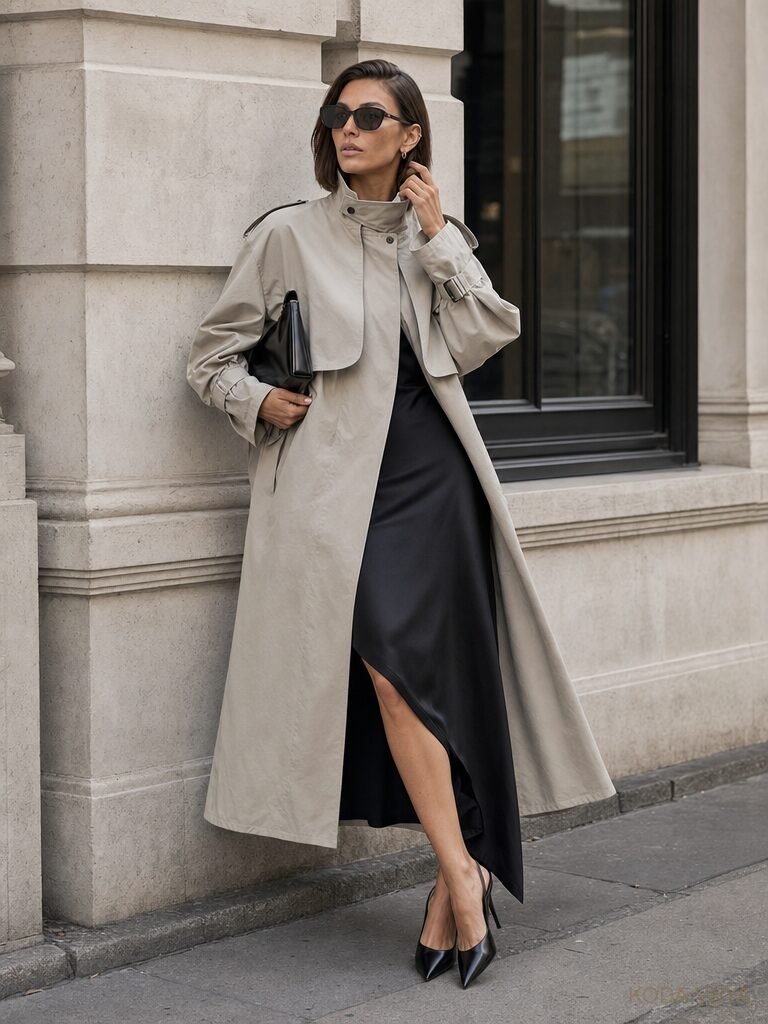
There is nothing wrong with the traditional stone trench. In fact, its familiarity is exactly what makes it interesting — the same quiet confidence that runs through Quiet Luxury, Without the Performance.
Put it over sensible separates and it behaves exactly as expected. Put the same coat over a fluid black asymmetric dress and pointed heels, and suddenly that practicality becomes tension. The trench makes the dress less precious; the dress stops the trench looking merely sensible.
That contrast matters. The best way to make a classic feel current is rarely to redesign every part of it. Sometimes you just need to put it somewhere it wasn’t expecting to go.
Leave the coat open. Let the dress move underneath it. Don’t add much else.
The trench already knows what it’s doing.
02
2. Let It Be Off Duty
A trench doesn’t become casual because you wear trainers with it.
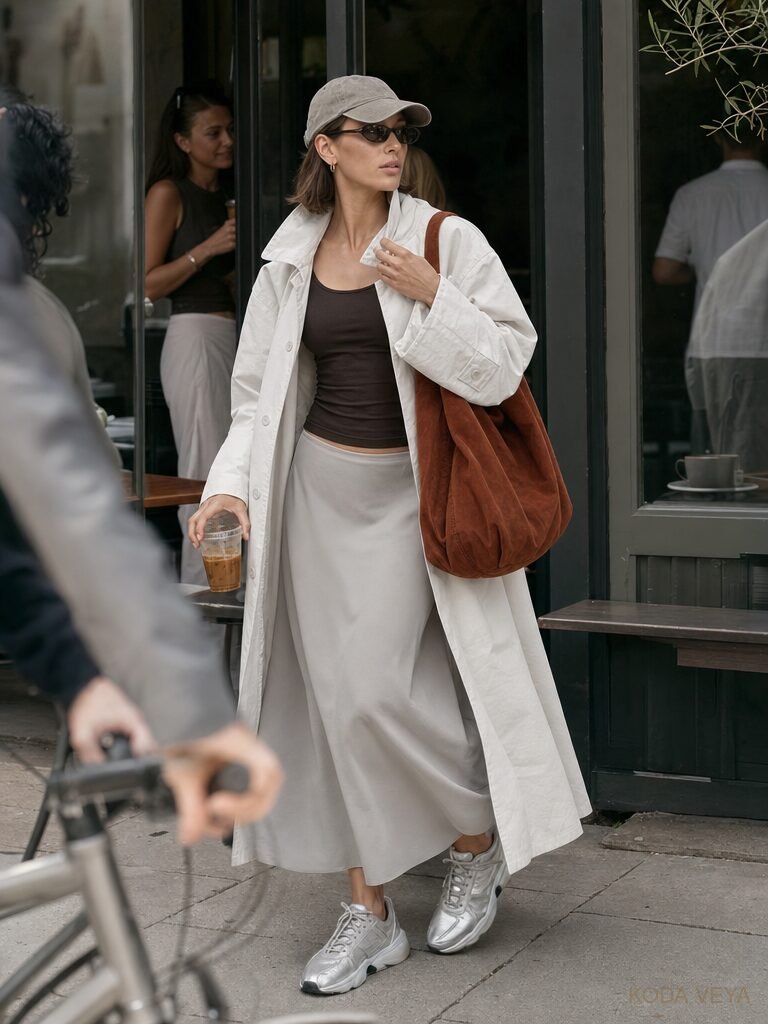
The more convincing version is looser than that: a long pale trench thrown over a fitted tank and fluid skirt, practical trainers underneath, an oversized suede bag over one shoulder. Nothing quite matches, and nothing needs to.
This is the trench at its most useful. Coffee in hand, somewhere to be, probably carrying more than you intended to leave the house with.
The proportions are what stop it becoming generic. A long coat against a long, soft skirt creates movement; the fitted top keeps all that volume from swallowing the body. The oversized rust suede bag adds warmth to an otherwise quiet palette and makes the whole thing feel collected rather than coordinated.
There is a difference between dressing casually and looking as though you haven’t thought about it.
This is the good version of both.
03
3. Change the Proportion
We tend to think of a trench as long almost by definition.
It doesn’t have to be.
Crop it at the hip and suddenly the familiar collar, storm flap, epaulettes and cuff straps read completely differently. What was once practical outerwear starts behaving more like a jacket.
The pale blush version works because it doesn’t try too hard to prove the point. The colour is soft, the construction is recognisable, but the shortened length changes the proportions of everything underneath it. A glimpse of midriff and wide trousers gives it an ease that a full-length trench simply couldn’t produce.
This is also where the idea of buying the trench coat becomes less useful.
There isn’t one definitive version. Long, cropped, oversized, fitted, cotton, leather, black, stone — once you stop treating the original as something that must be faithfully preserved, the trench becomes much more interesting.
Heritage is useful.
Reverence, less so.
04
4. Let the Trench Be the Outfit
Sometimes the coat doesn’t need styling.
It needs confidence.
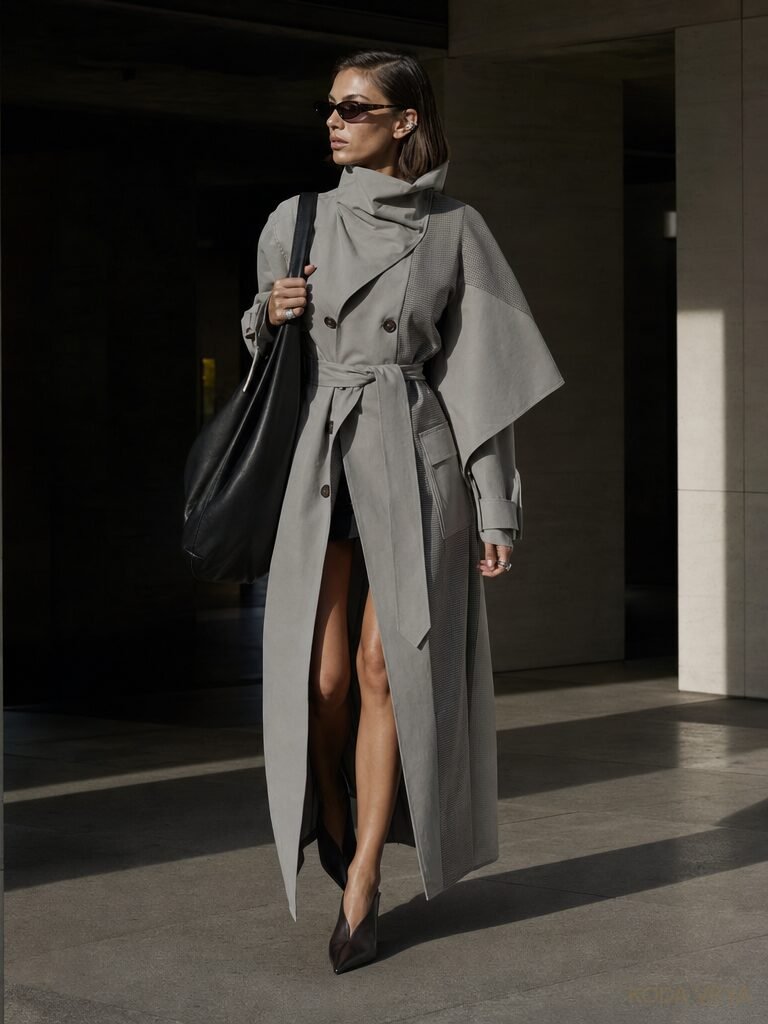
A sculptural grey trench with an exaggerated collar, asymmetric construction, cape-like sleeves and a tightly defined waist isn’t there to politely finish what you’re wearing underneath. It has already made the decision.
That changes how everything else should behave.
Keep the shoes sharp. Keep the bag simple. Let glimpses of skin appear through the movement of the coat rather than competing with it through more layers, more jewellery or another statement piece.
There is a temptation, when one item is unusual, to keep adding things until the outfit feels sufficiently “fashion.” Usually that is the moment it stops being so.
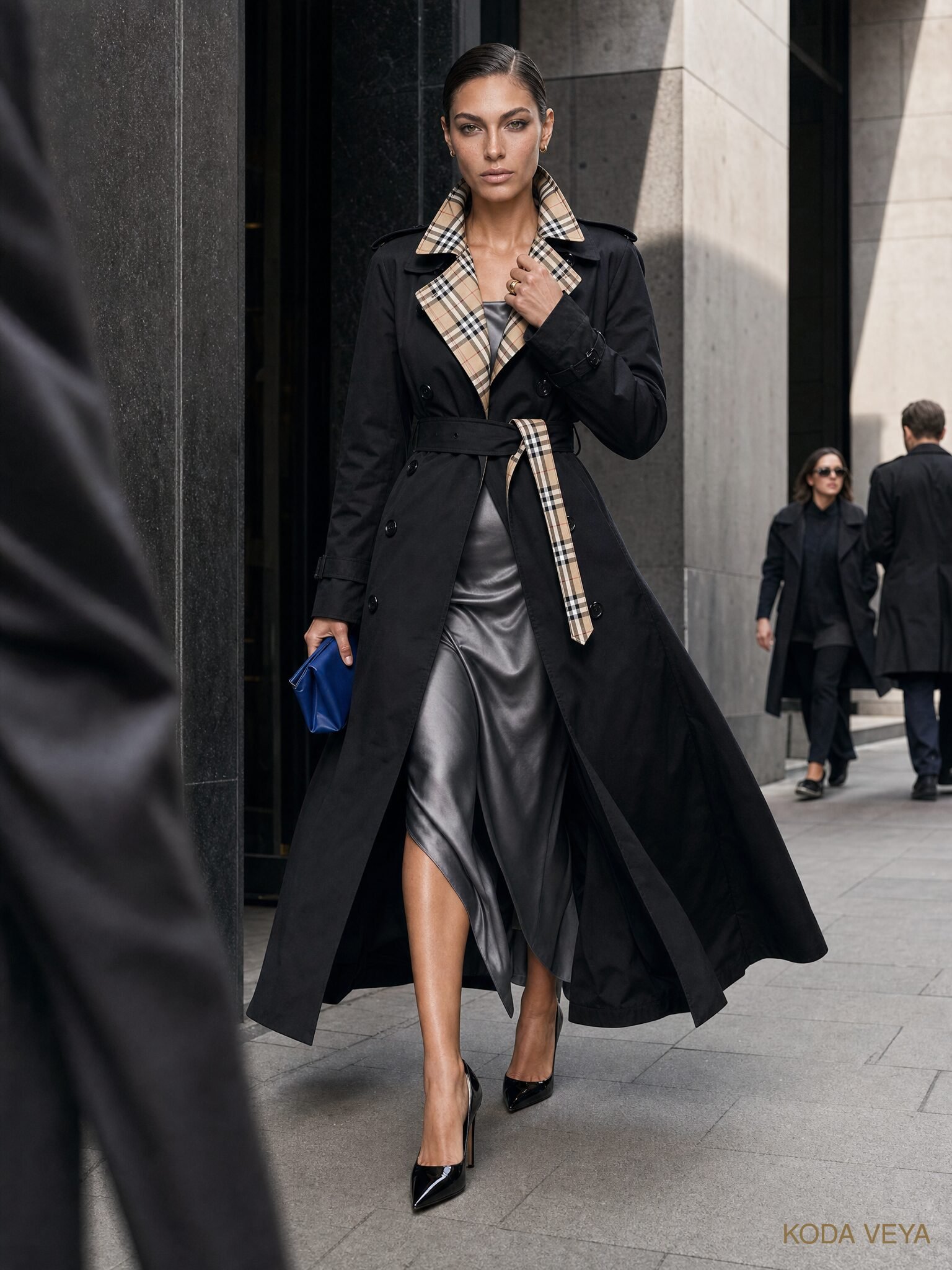
A black trench has always carried a little more attitude than its beige counterpart. It loses some of the country-weekend practicality and gains something sharper in return.
But the interesting part here isn’t simply changing the colour.
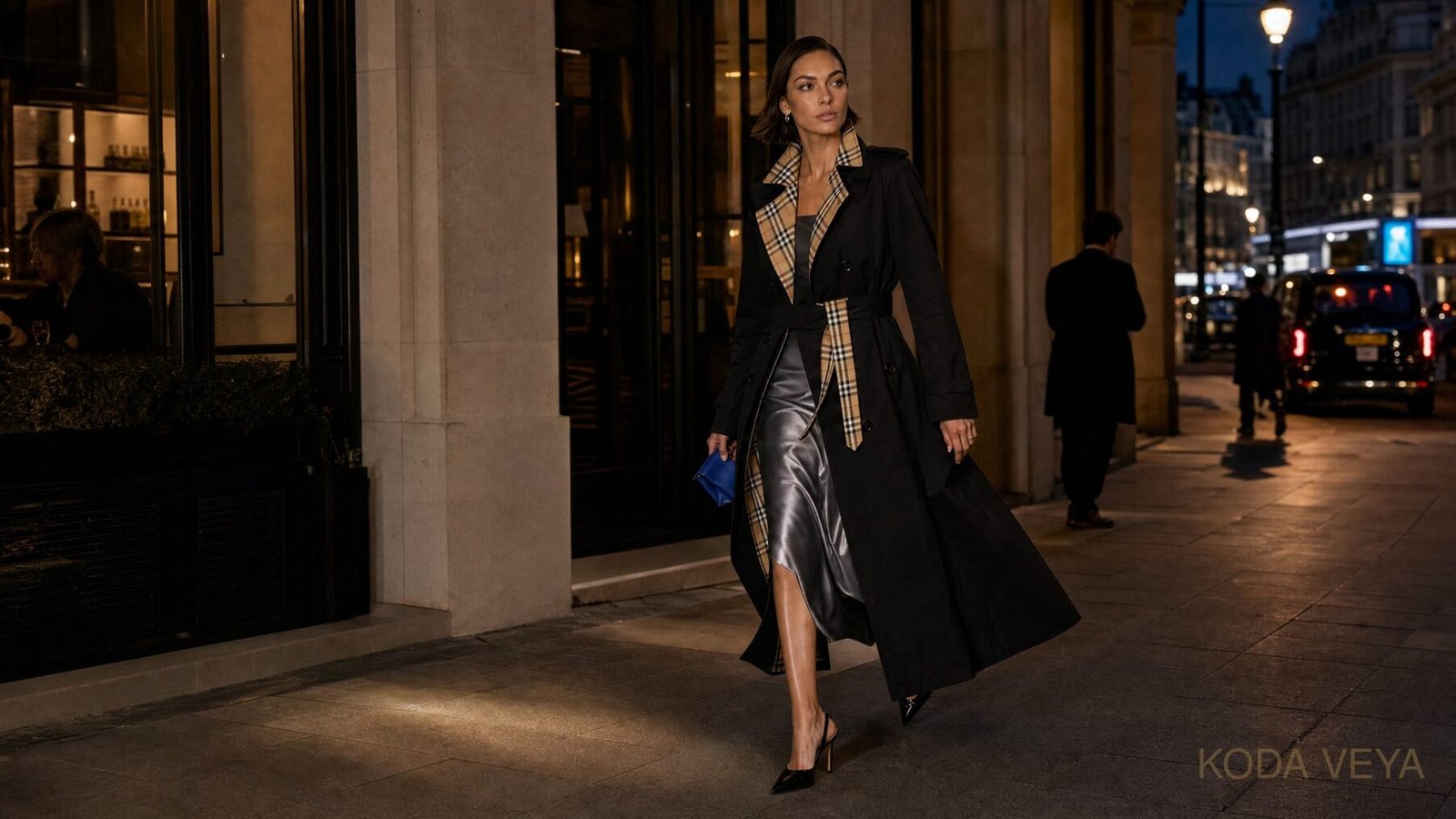
Let flashes of heritage check appear at the collar and belt. Put liquid metallic fabric underneath it. Add a pointed black heel. Then interrupt all that black and silver with one absurdly small, intensely blue bag.
That’s when the trench stops being the thing you wear over an evening outfit.
It becomes part of the evening outfit.
There is something particularly good about clothes that refuse their assigned hours. Sequins at breakfast. Silk in the afternoon. A trench after dark.
Getting dressed becomes considerably more interesting once you stop asking whether something is supposed to be there.
06
The Coat That Doesn’t Need Reinventing
The trench has lasted because its basic idea was good enough in the first place.
What it doesn’t need is another declaration that it is “back,” or a list of rules for wearing one correctly. The interesting question isn’t whether a trench belongs in your wardrobe. At this point, we know what it can do.
The question is whether you’re letting it do enough.
Wear the stone one over something unexpectedly elegant. Let the pale one become genuinely casual. Cut the proportions short. Make the coat itself the statement. Take the black one somewhere it has no practical reason to be.
Autumn will provide plenty of sensible reasons to reach for a trench.