Style / The Koda View
Does the 3-3-3 Capsule Wardrobe Rule Actually Work?
Nine pieces. Twenty-seven possible outfits. I tried the 3-3-3 capsule wardrobe to see how many combinations were actually worth wearing.
The 3-3-3 rule for outfits sounds extremely satisfying: choose three tops, three bottoms and three pairs of shoes, then mix them into as many as 27 combinations.
It is essentially a nine-piece capsule wardrobe with very good maths behind it.
On paper, almost everything works.
Clothes are slightly less cooperative.
Because three tops multiplied by three bottoms multiplied by three shoes may produce 27 combinations. It doesn’t automatically produce 27 good outfits.
And that is where the 3-3-3 rule becomes much more interesting.
What Is the 3-3-3 Rule for Outfits?
The 3-3-3 rule means choosing three tops, three bottoms and three pairs of shoes that can be mixed together to create up to 27 different outfits.
It isn’t the same as Project 333, the older minimalist challenge based around wearing 33 items for three months.
This version is smaller, faster and considerably easier to turn into a neat wardrobe grid.
Three tops. Three bottoms. Three shoes.
Twenty-seven possibilities.
The premise is that each piece should work with almost everything else.
I wanted to know whether it actually does.
02So I Built One
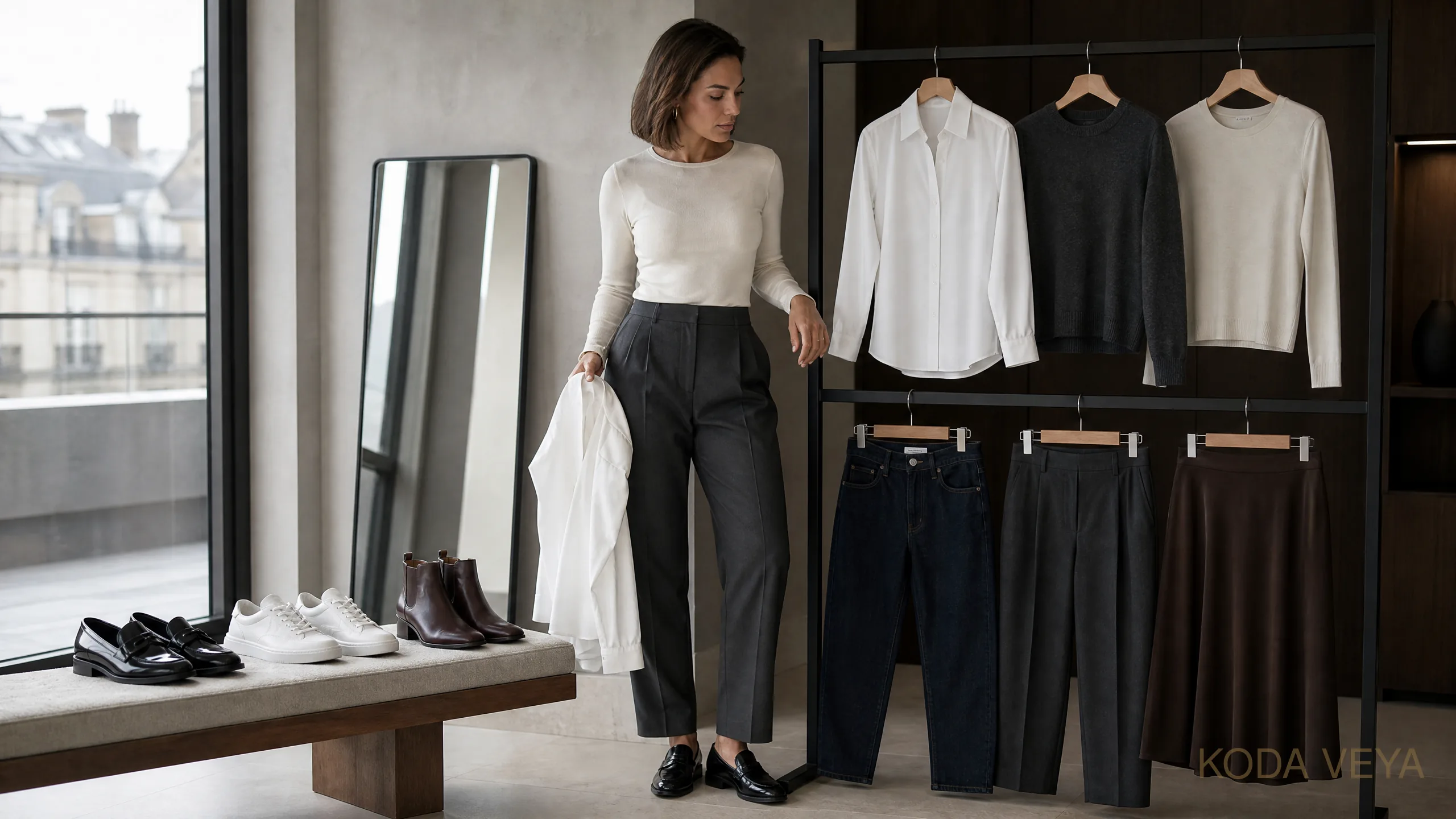
I started with pieces I could realistically imagine wearing. Nothing deliberately difficult, and nothing chosen purely to make the experiment succeed.
The three tops:
A crisp white shirt.
A fine charcoal knit.
A soft cream long-sleeved top.
The three bottoms:
Dark straight-leg denim.
Charcoal tailored trousers.
A deep chocolate midi skirt.
The three shoes:
Black loafers.
Slim white trainers.
Dark brown ankle boots.
The palette is intentionally restrained: white, cream, charcoal, chocolate and dark denim.
The colours cooperate. The silhouettes are familiar. Every piece has a reason to be there.
Then I started making outfits.
03The First Combination Is Easy
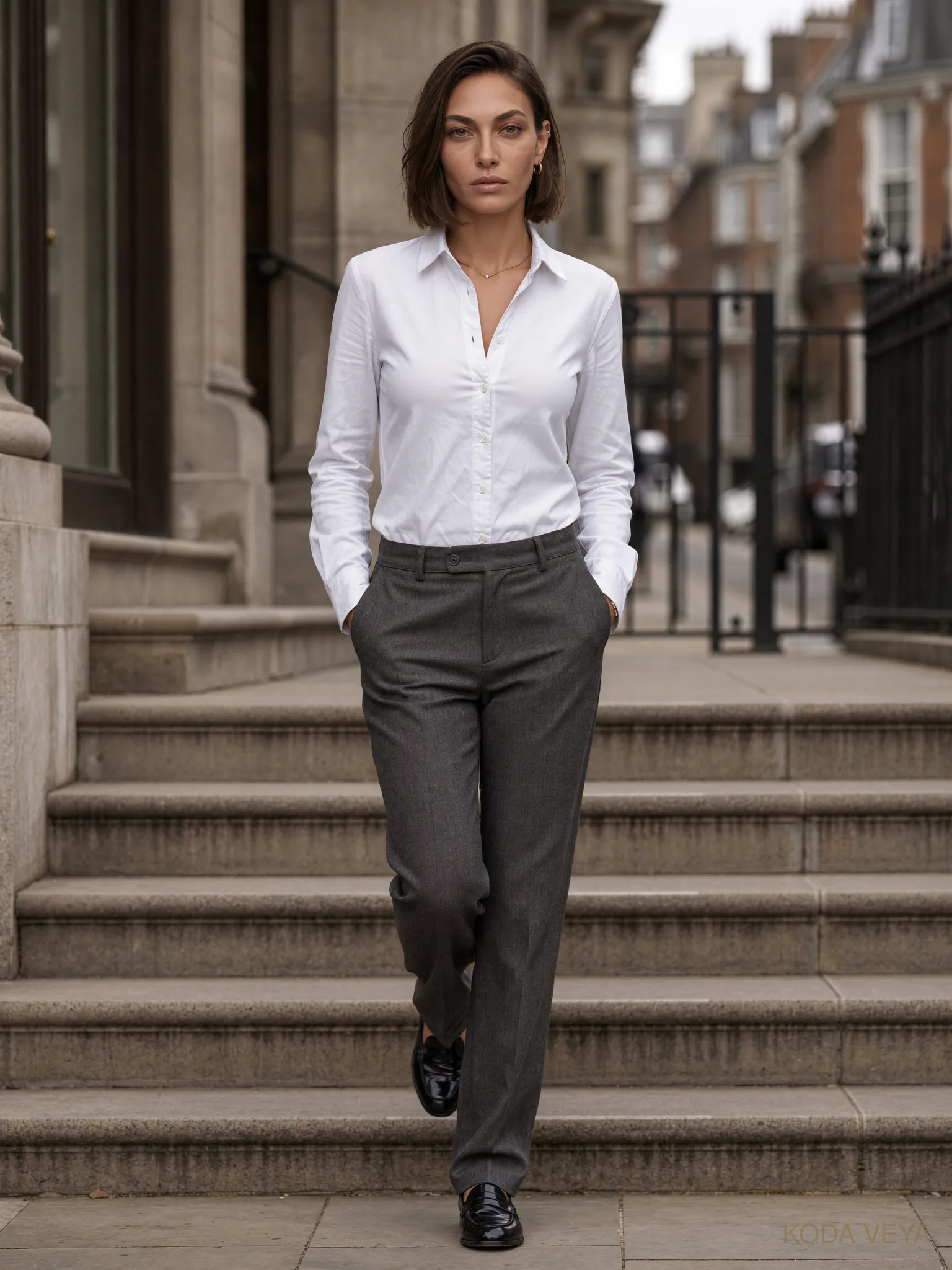
A crisp white shirt tucked into charcoal trousers with black loafers works immediately.
The proportions make sense. The shirt gives the tailoring some brightness, while the loafers keep it polished without pushing it into full office uniform.
Nothing particularly clever is happening.
It is simply a good outfit.
Look 01 — White shirt + charcoal trousers + black loafers
Office steps.
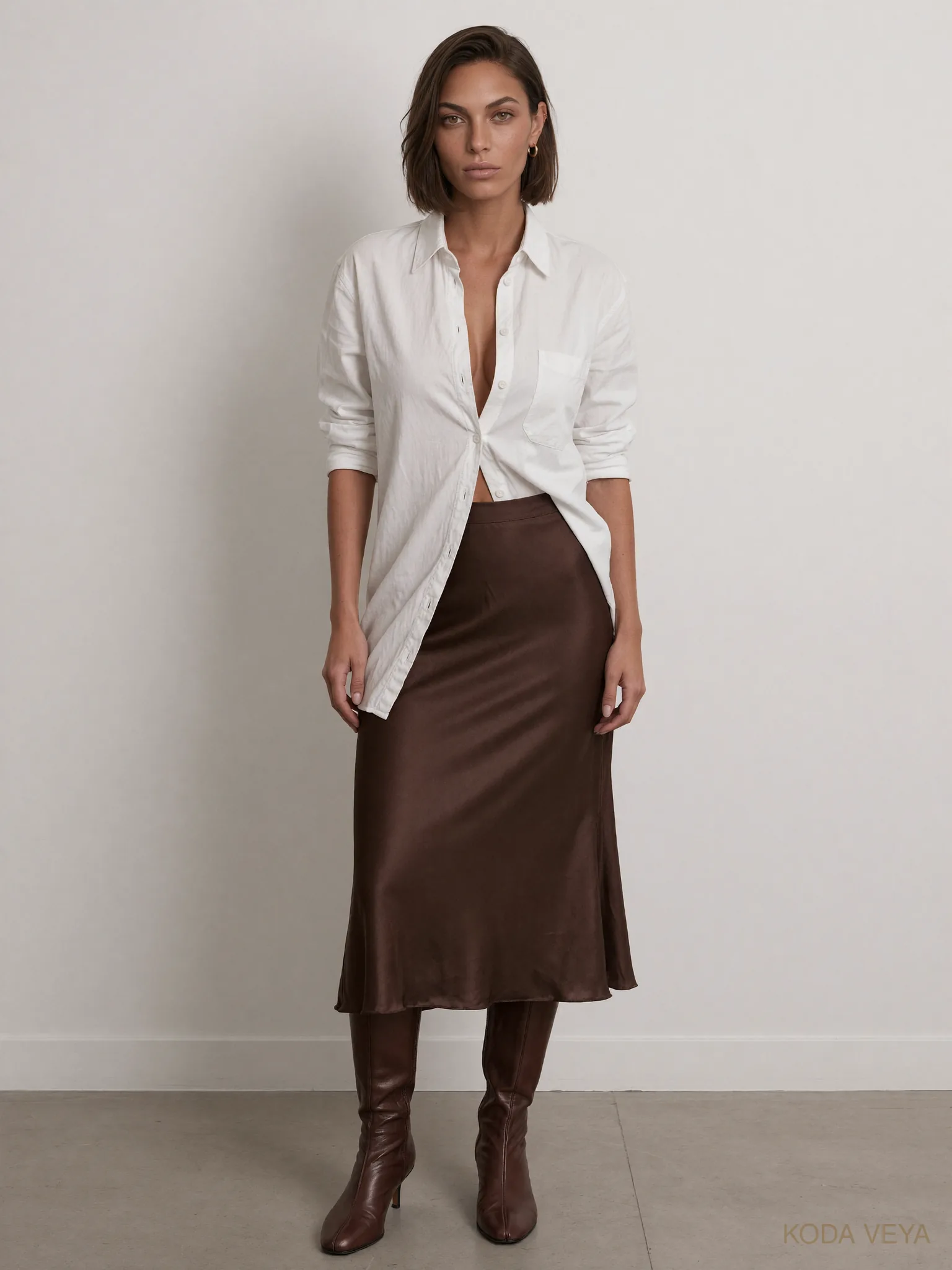
Then the same white shirt changes completely when it is left loose over the chocolate midi skirt with brown ankle boots.
The colour story becomes softer and the proportions more relaxed. Same shirt. Different idea.
Look 02 — White shirt + chocolate midi + brown boots
Gallery.
Open that shirt over the cream top, add denim and white trainers, and it moves somewhere else again.
This is where the rule starts proving its point.
Look 03 — White shirt + cream top + denim + white trainers
Market.
04But 27 Outfits Is Not the Same as 27 Good Outfits
This is where the arithmetic begins to wobble.
Technically, almost every combination can be put together.
That doesn’t mean every combination deserves to leave the house.
The issue is rarely colour. With a capsule this restrained, most of the colours are perfectly compatible.
It is proportion.
A boot that looks excellent beneath the chocolate midi can feel awkward beneath a particular trouser length. A loose shirt that works beautifully with denim may create too much volume with the skirt. A trainer may technically match everything while still making one outfit feel unfinished.
Those combinations still count towards the 27.
I’m not sure they should.
Clothes don’t simply need to match.
They need to balance.
It is the same reason silhouette matters so much when an outfit looks considered rather than merely expensive-looking. The individual pieces can all be good; the relationship between them still has to work.
05Compatibility Is Not Styling
This may be the most useful thing the 3-3-3 capsule wardrobe exposes.
Owning clothes in compatible colours isn’t the same as owning clothes that genuinely work together.
A wardrobe can be entirely cream, black, navy and grey and still be surprisingly difficult to style.
Perhaps every trouser needs a different shoe height. Perhaps all your tops have the same oversized volume. Perhaps the skirt really needs something fitted, but everything you bought this year is loose.
Or perhaps every individual item is perfectly nice and none of them has much to say to the others.
That is useful information.
The problem isn’t automatically that you need more clothes.
It may be that the clothes you already own are solving different problems.
06The Tonal Outfit Proves Something Else
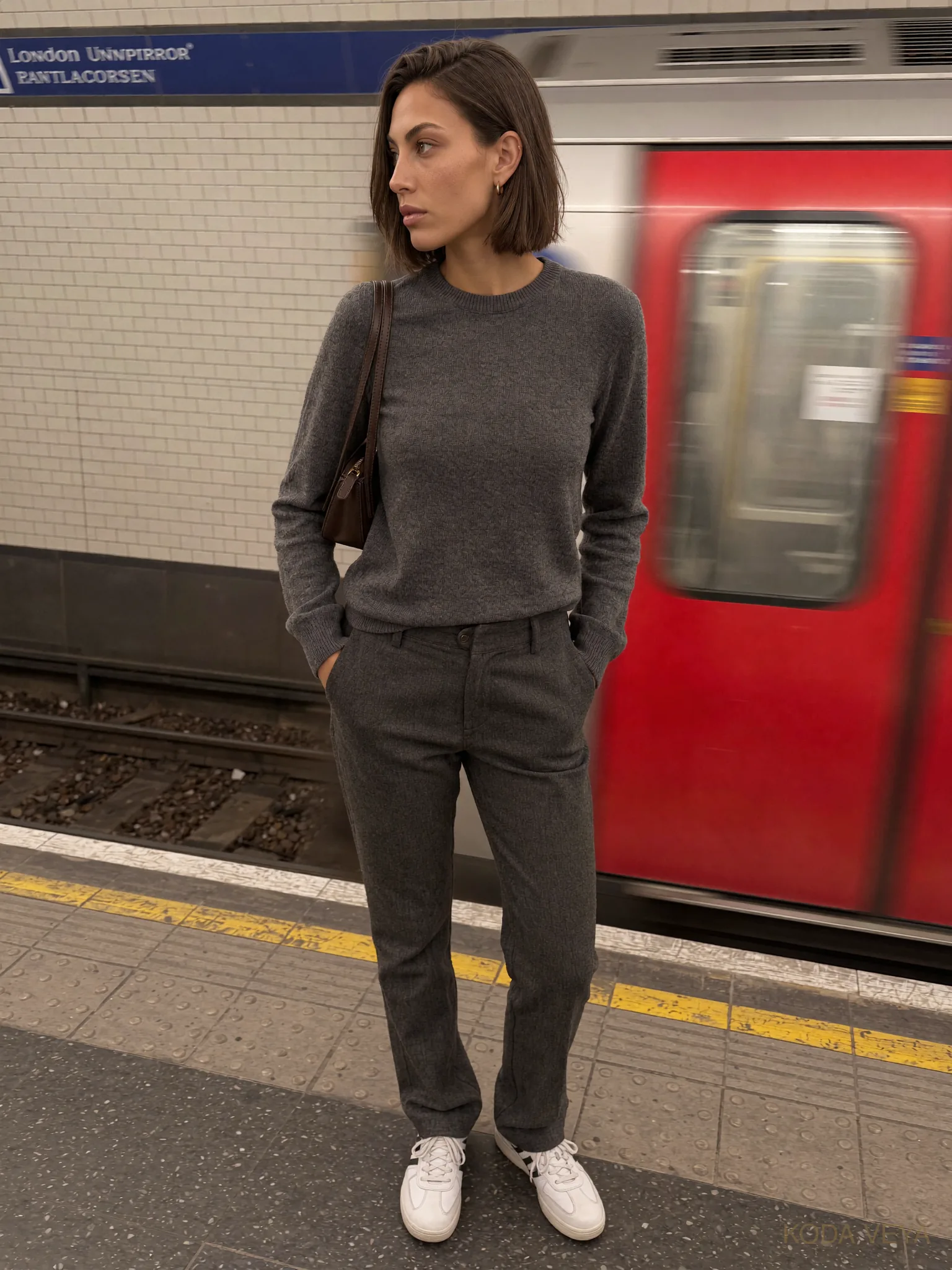
The charcoal knit with charcoal trousers is deliberately close in colour.
Add white trainers and suddenly the difference comes from shape and texture rather than contrast.
This one works because the knit is soft against the cleaner trouser line, and the trainer stops the outfit becoming too formal.
Look 04 — Charcoal knit + charcoal trousers + white trainers
Tube platform.
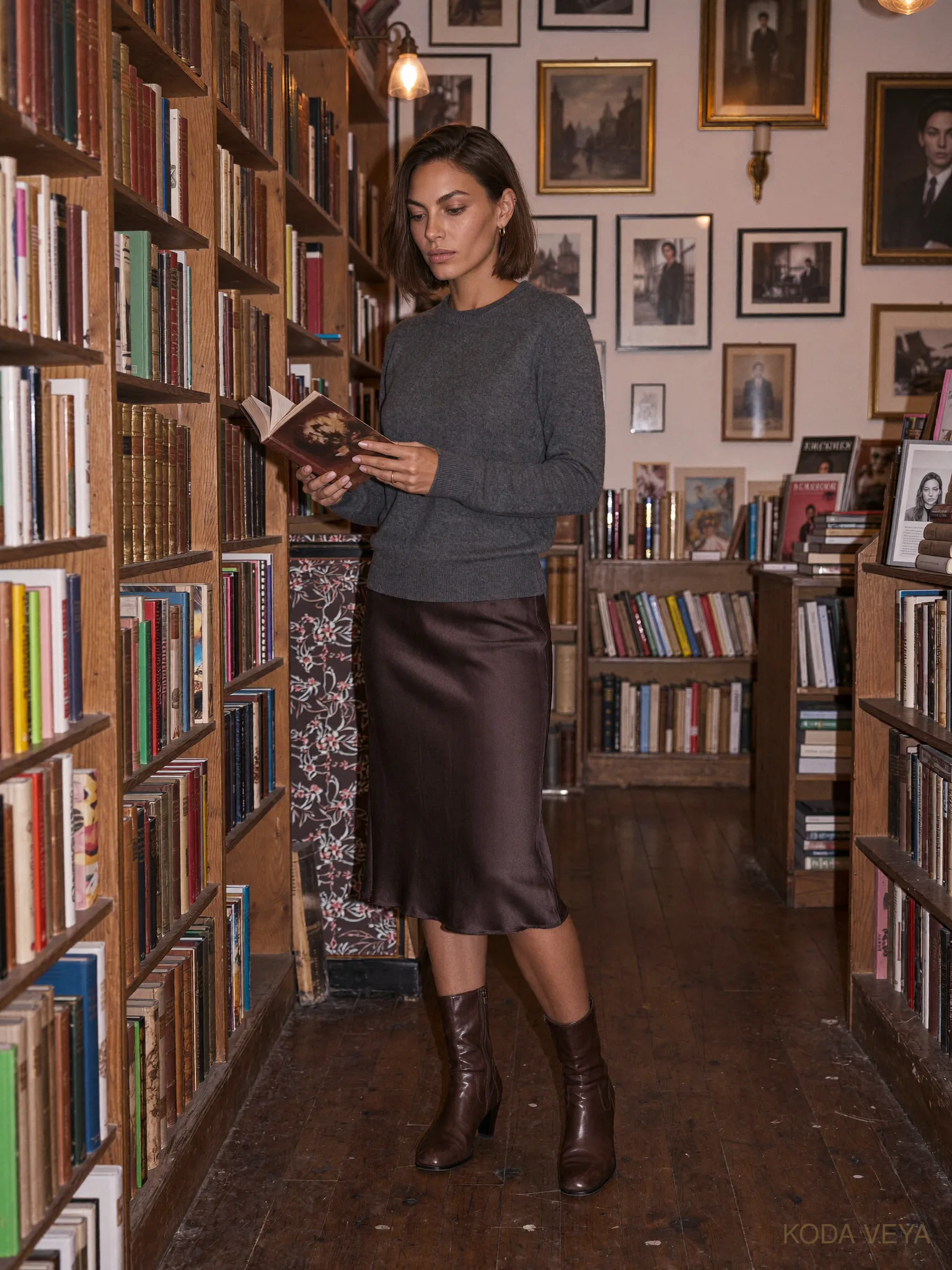
Then take exactly the same knit and put it with the chocolate midi and brown boots.
Charcoal and chocolate should be slightly dull together.
They aren’t.
The skirt introduces movement and warmth; the boot keeps the bottom half continuous.
Look 05 — Charcoal knit + chocolate midi + brown boots
Bookshop.
This is where a good capsule earns its keep: not because every combination is interchangeable, but because individual pieces can change mood.
07Layering Makes the Maths More Interesting
The original formula doesn’t really account for styling.
That matters.
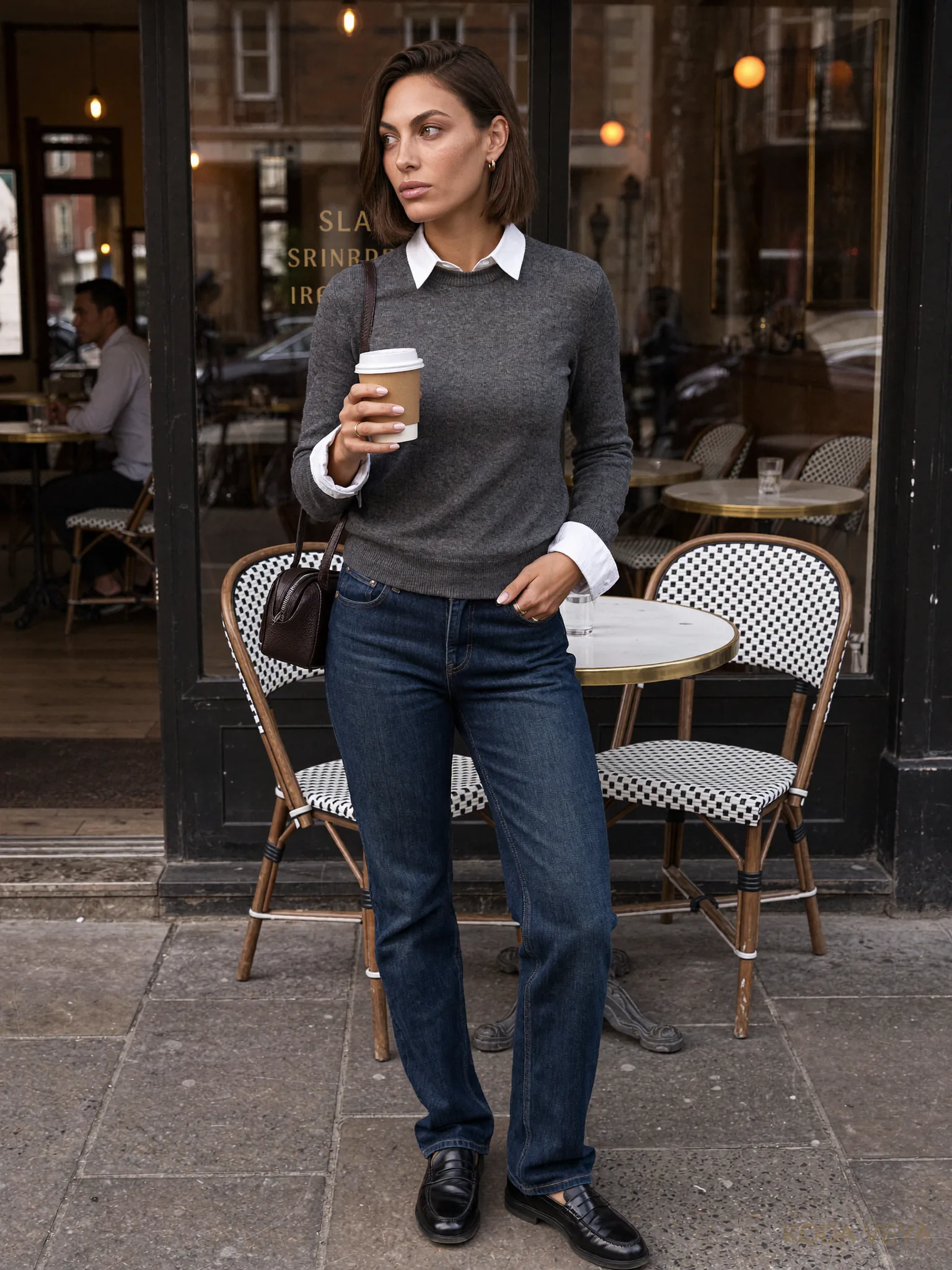
Put the charcoal knit over the white shirt, leave the collar and a little cuff visible, then add denim and loafers.
Technically, two of the three tops are now being worn at once.
The spreadsheet has been compromised.
The outfit has improved.
Look 06 — Charcoal knit over white shirt + denim + loafers
Café.
This is why I find the obsession with exactly 27 combinations slightly peculiar.
A tuck changes proportion. An open shirt creates a layer. A rolled sleeve changes how polished something feels.
Styling creates variation that arithmetic cannot properly count.
08The Rule Is Better as a Test Than a Philosophy
This is where I think 3-3-3 becomes genuinely useful.
Don’t treat it as a prescription for how many clothes you should own.
Use it as an audit.
Pick nine pieces you wear regularly and see how many convincing outfits they actually create.
Not theoretically possible outfits.
Outfits you would willingly leave the house in.
If you make 18 combinations you genuinely like, excellent.
If you make eight, that tells you something too.
Perhaps you own too many standalone pieces. Perhaps you keep buying beautiful trousers without thinking about the shoes underneath them. Perhaps one supposedly versatile top only ever looks right with denim.
The failures are useful.
They reveal the architecture of the wardrobe.
09Some Combinations Need Almost Nothing
The cream top with the chocolate midi and brown boots may be the simplest outfit in the experiment.
It is also one of the strongest.
The colours sit closely enough together to feel calm, while the skirt and boot give it shape.
Look 07 — Cream top + chocolate midi + brown boots
Sunday flat.
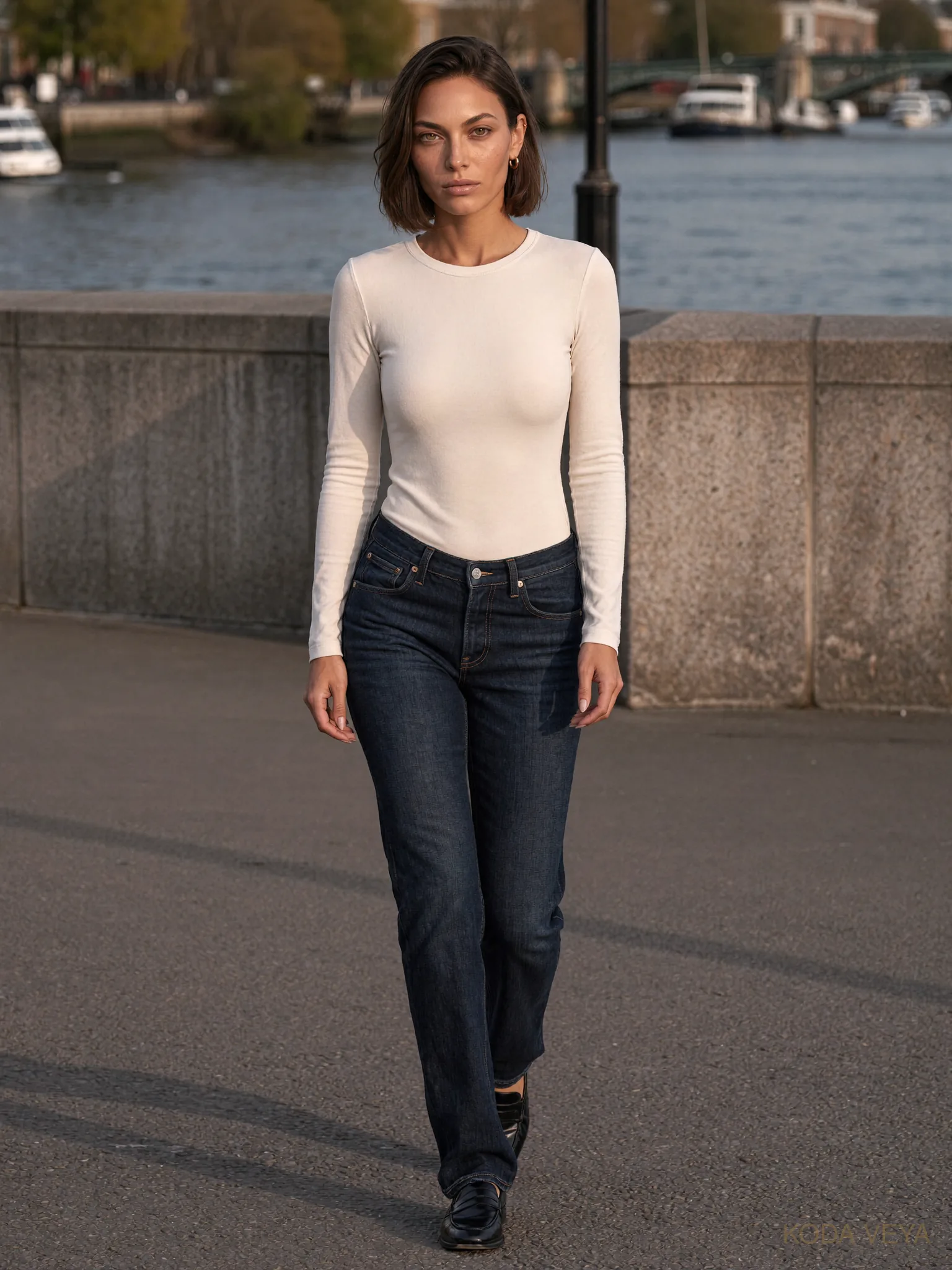
Tuck the same cream top into denim and switch to loafers and it becomes sharper immediately.
Look 08 — Cream top + denim + loafers
Riverside.
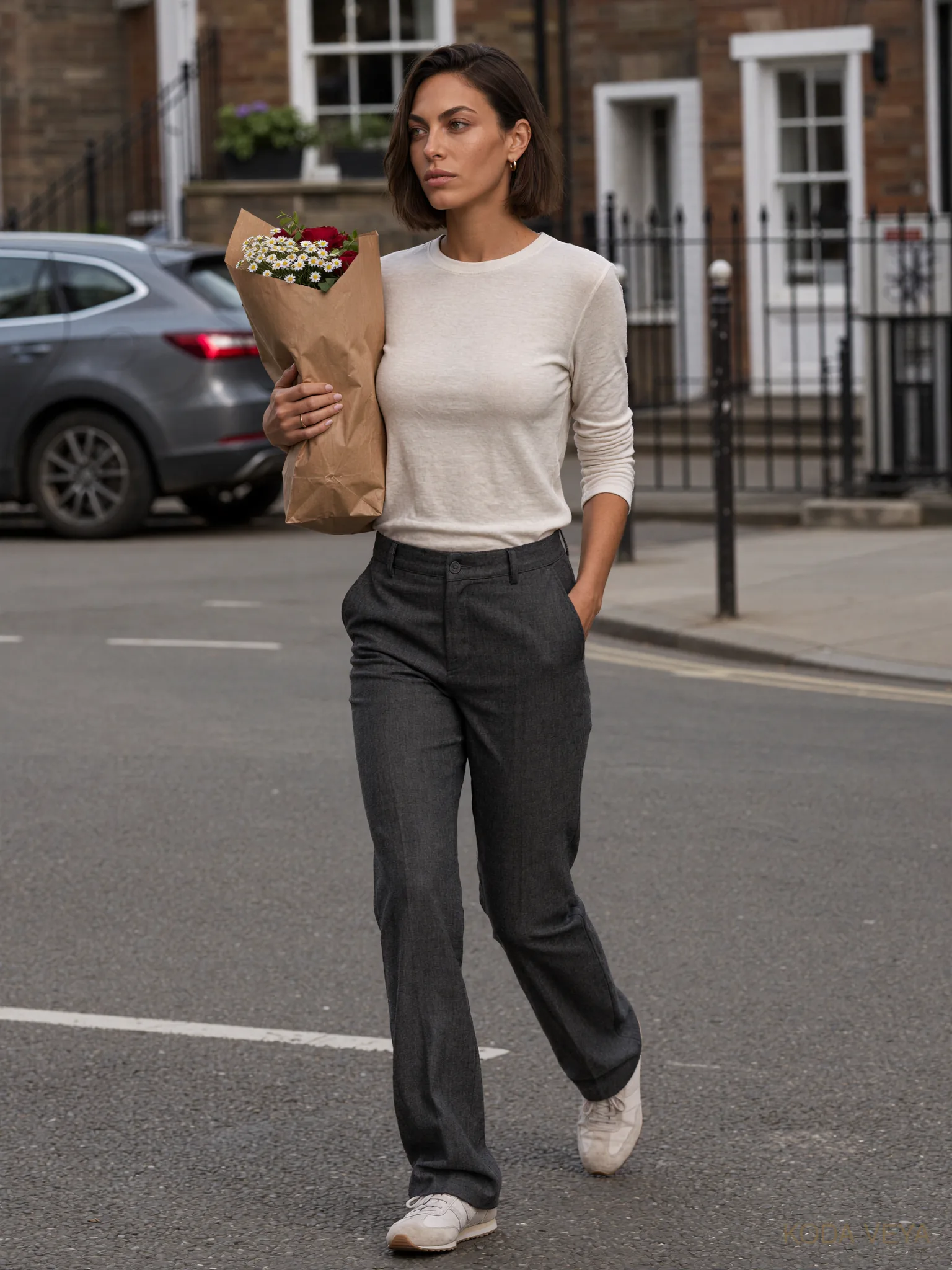
Then charcoal trousers and white trainers move it back towards something easier and more everyday.
Look 09 — Cream top + charcoal trousers + white trainers
Weekend errands.
Three combinations. Same top.
None feels like the same outfit with the trousers changed.
That is what I’d actually call versatility.
10Where the 3-3-3 Rule Works Best
For travel, the appeal is obvious.
Packing forces clothes to cooperate in a way a wardrobe at home doesn’t. You need the shirt to work with the denim and the trousers because there is no second wardrobe waiting in the hotel room.
The same is true when your wardrobe feels full but getting dressed still feels strangely difficult.
Nine pieces make the problem visible.
The rule removes enough choice that you can actually see what is working.
That is useful.
11Where It Becomes Too Clever
I become sceptical when the exercise turns into a philosophy.
There is nothing inherently superior about extracting 27 outfits from nine pieces.
Some clothes are worth owning precisely because they do one thing exceptionally well.
A dramatic evening jacket doesn’t need to work with all three pairs of trousers. A beautiful silk skirt doesn’t become a bad purchase because your trainers look dreadful with it.
A wardrobe built entirely around maximum interchangeability can become efficient and strangely characterless.
Minimalism has already shown us what happens when practicality becomes an aesthetic requirement: eventually everybody owns a variation of the same sensible wardrobe.
Useful is good.
Useful isn’t the only reason to own clothes.
12Shoes Expose the Weakness Fastest
Shoes are where the formula gets particularly optimistic.
We talk about them as though they are interchangeable finishing touches.
They aren’t.
A wide tailored trouser may need a very different shoe proportion from a midi skirt. Denim can take a loafer beautifully while the same loafer makes another combination feel slightly school uniform.
And then there is London weather.
Which brings me to the final outfit.
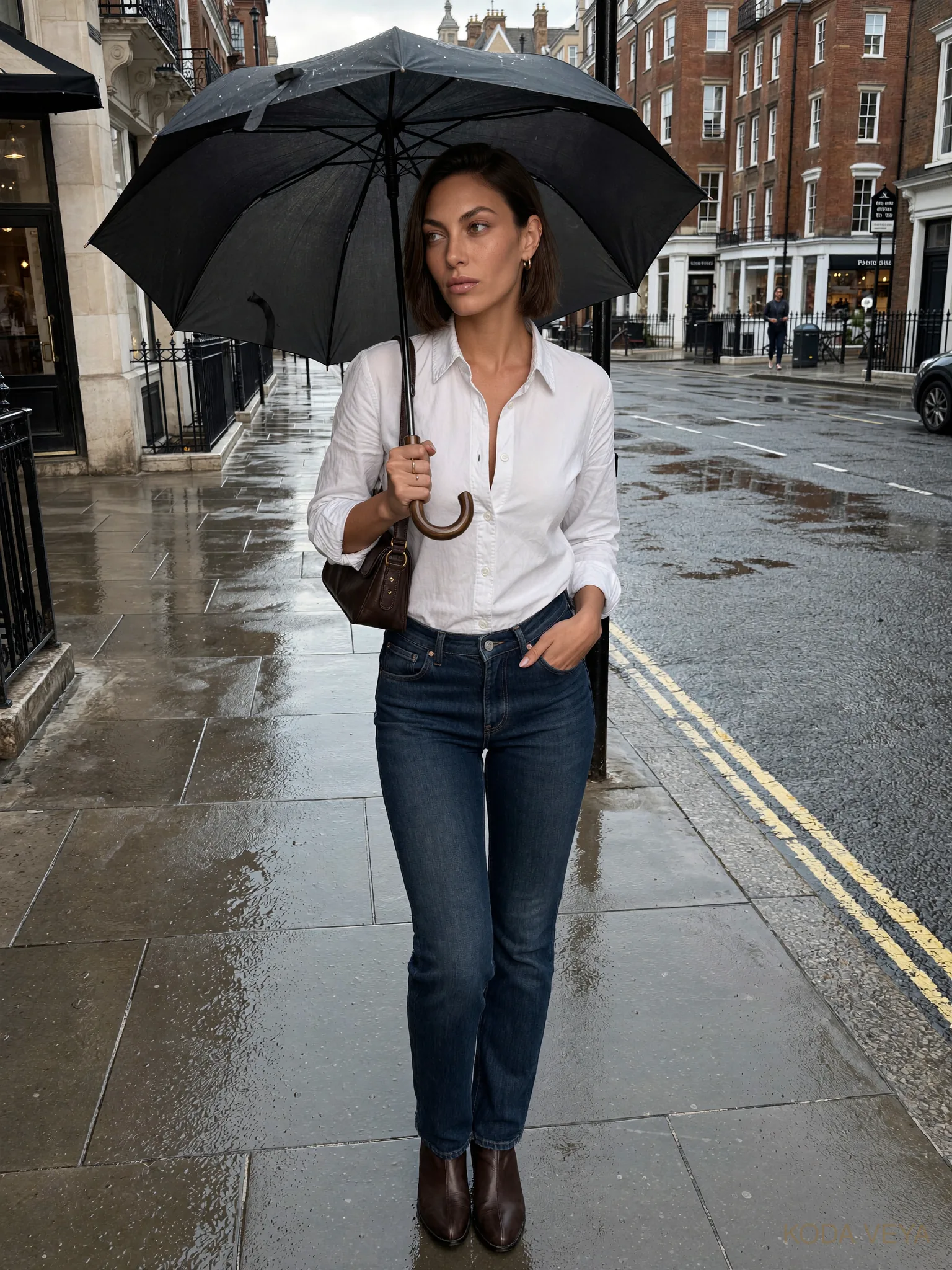
A white shirt, dark denim and brown ankle boots is straightforward enough.
Add a wet pavement and suddenly the boot isn’t simply a styling decision.
It is the sensible one.
Look 10 — White shirt + denim + brown boots
Wet London street.
Context is part of an outfit.
So is whether your feet are cold.
13What I’d Change About the 3-3-3 Rule
I’d keep the restriction.
I’d abandon the obsession with reaching 27.
Instead, I’d ask three questions.
Do these tops work with more than one bottom?
Do these bottoms work with more than one shoe?
And can I create genuinely different outfits rather than the same formula in slightly different colours?
That last question matters.
Changing a cream knit for a charcoal knit technically creates another outfit.
It may not create another idea.
A useful wardrobe needs repetition. Personal style usually needs some difference as well.
14My Better Version: Nine Pieces, Ten Excellent Outfits
That is the version of the 3-3-3 capsule wardrobe I’d actually use.
Choose three tops, three bottoms and three shoes.
Then aim for ten excellent outfits.
Ten combinations you genuinely want to wear.
Ten outfits with enough variation in proportion, mood and formality to be useful.
If the nine pieces produce more, good.
If one trouser only works with one shoe, notice it.
If one top works with everything but never makes any outfit particularly interesting, notice that too.
The purpose isn’t to prove how little clothing you need.
It is to understand what the clothing you already own is doing.
15What the 3-3-3 Rule Really Shows You
This is why I don’t dislike the 3-3-3 rule.
I just think its most interesting result isn’t the one being advertised.
The promise is that nine pieces can create 27 outfits.
The useful part is discovering why some of those 27 don’t work.
That tells you where the gaps are. It shows you which supposedly versatile purchases aren’t particularly versatile at all, and which pieces quietly keep rescuing everything around them.
Occasionally, it may even show you that the thing you were about to buy is already sitting in your wardrobe waiting for a better combination.
That is useful.
Twenty-seven outfits is just good maths.
Good style is slightly harder.
Further reading
What Makes an Outfit Look Expensive →
Camel and Cream Outfits →
After Quiet Luxury →
 Save for later
Join the Edit · Free guide
The Koda Wardrobe Edit
A free guide to buying better, wearing more and editing out the noise.
- Work out what you actually wear, and why
- The colour ratio method
- A one-page wardrobe brief to keep for your next purchase
Sent straight to your inbox, along with my latest fashion, beauty and wellbeing edits. Unsubscribe any time.