BEAUTY / THE KODA VIEW
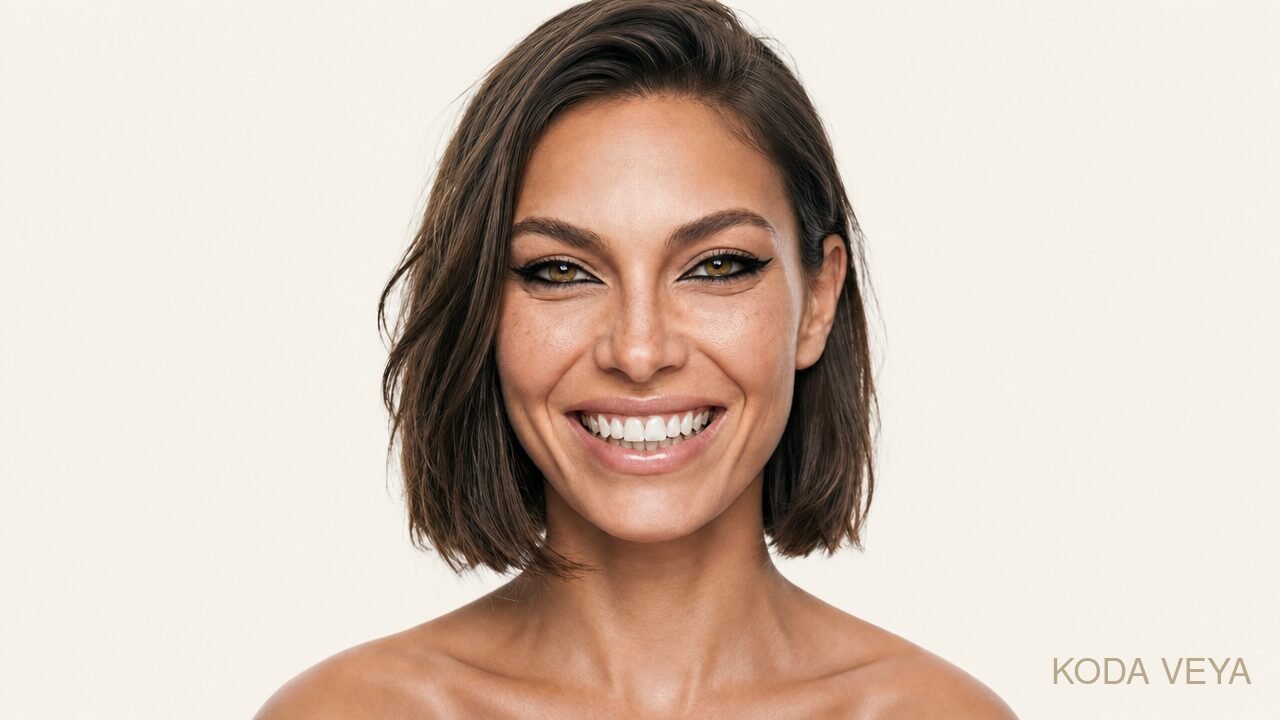
When Less Makeup Looks Better
Sometimes the most polished face is the one you stopped adding to. The judgement that ties the whole Beauty Edit together.
There is a moment in almost every makeup routine when the face is finished.
And then there is the moment when we decide it isn’t.
A little more concealer. More blush. Another layer of mascara. A sharper lip. Powder where the skin looks slightly too real.
None of these decisions feels particularly dramatic on its own.
Together, they can change the entire face.
Koda’s view is simple: makeup should reveal something, not keep correcting it.
Because sometimes the most beautiful thing you can do is stop.
The face doesn’t need fixing
There is a strange expectation around makeup that the finished face should be more perfect than the face underneath it.
More even. More sculpted. More defined. More symmetrical.
But real skin has variation. Eyes aren’t perfectly identical. Cheeks move when you smile. Lips have edges that aren’t mathematically precise.
None of that needs correcting.
In fact, those small irregularities are often what make a face interesting.
I would rather see someone’s face than see evidence of how hard they worked on it.
02More isn’t automatically more polished
We often confuse polish with precision.
A heavier base can look more perfected, but it doesn’t necessarily look better. A stronger contour can create more definition, but it doesn’t necessarily create more beauty.
There is a point where makeup stops refining the face and starts becoming the most noticeable thing about it.
That’s usually the moment to step back.
Good makeup should work with the architecture of your face.
It shouldn’t replace it.
03Let the skin have a say
This is why I keep coming back to skin.
Not perfect skin. Real skin.
A little texture. A little colour. The places where light catches differently.
When the complexion is allowed to remain visible, everything else tends to look more intentional.
Blush looks softer.
Lip colour looks richer.
Eyes look brighter.
And suddenly you don’t need quite so much of anything.
The less you cover, the more carefully you choose what remains.
04The danger of fixing the thing that wasn’t wrong
Makeup can become a series of tiny corrections.
One area leads to another.
The concealer needs setting. The setting powder makes the skin look dry. So you add something to bring the glow back. The glow makes another area look uneven. So you correct that.
At some point you’re no longer getting ready.
You’re managing the makeup.
I don’t think beauty should require that much administration.
If something looked perfectly fine before you touched it, there is a reasonable chance it can stay that way.
05There is such a thing as enough
This might be the hardest part.
Not applying makeup is easy.
Knowing when you’ve applied enough requires judgement.
Look at the whole face rather than the individual details.
Does the blush still look like colour in the skin?
Do the brows still look like brows?
Can you still see the texture of your complexion?
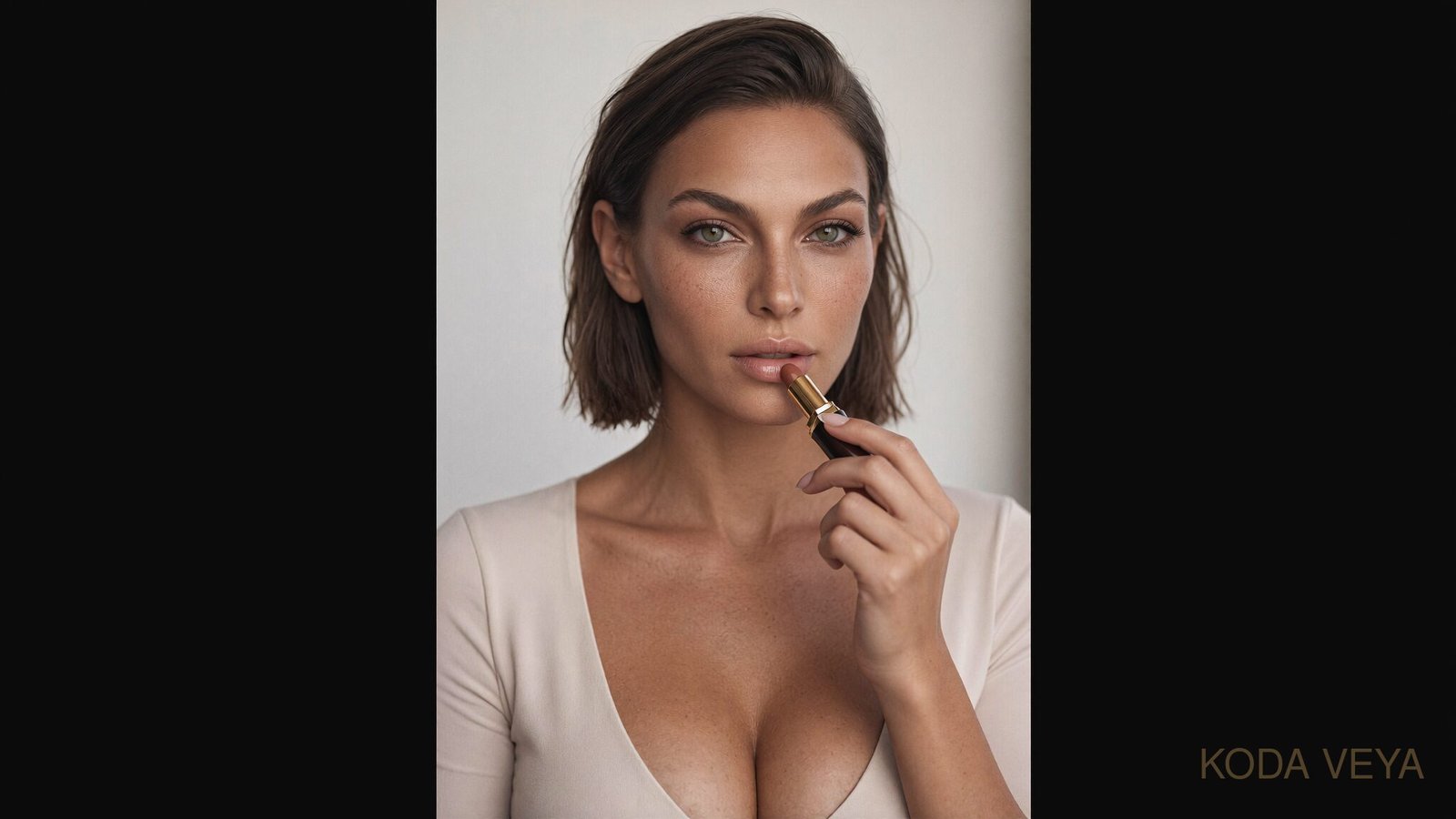
Does the lipstick belong to your face, or has it become the first thing you see?
If everything is competing for attention, take something away.
The final edit is often the most important one.
06Makeup should leave room for you
The best beauty looks have a little breathing space.
You can see the person underneath them.
They can laugh without worrying about ruining the symmetry. They can walk outside into daylight. They can have a glass of wine, eat dinner, get caught in the rain.
Nothing needs constant supervision.
That matters more to me than whether every detail survives perfectly until midnight.
Beauty should move with you.
It shouldn’t make you afraid to touch your own face.
07The expensive-looking face isn’t necessarily the most made-up
There is a reason understated beauty can feel so luxurious.
It isn’t because it uses less product for the sake of it.
It’s because every element appears considered.
The skin isn’t fighting the foundation.
The blush isn’t fighting the lipstick.
The eyes aren’t competing with the brows.
Nothing is shouting.
Everything belongs.
It’s the same judgement behind a five-minute routine, an edited makeup bag, and a shelf where nothing gets replaced simply because it’s nearly gone.
Restraint is not the absence of effort. It’s evidence of judgement.
And judgement is one of the hardest things to fake.
08Try taking one thing away
Tomorrow, do your makeup as you normally would.
Then stop.
Look at yourself before reaching for the final product.
And take one thing away.
Maybe it’s the extra layer of foundation.
Maybe it’s the second coat of mascara.
Maybe it’s the lip liner that suddenly feels too precise.
Maybe it’s nothing at all.
The point isn’t to wear less makeup.
The point is to notice what happens when you stop adding.
09The face you recognise
I don’t think the goal of beauty is to create a better version of your face.
I think it’s to become more comfortable with the one you already have.
Makeup can be transformative. It can be expressive, glamorous, playful and dramatic.
There is absolutely a place for all of that.
But everyday beauty doesn’t need to perform.
Sometimes a little colour, a little definition and good skin are enough.
Sometimes the lipstick is enough.
Sometimes nothing needs adding.
The most considered face isn’t the one with the most done to it.
It’s the one where everything that remains has a reason to be there.
Read next
Beauty, Without All the Fuss →
Join the Edit
The Koda Veya Edit
The looks, finds and places worth knowing.